
Cell culture is a cornerstone of modern biological research, enabling scientists to study cellular behavior, model disease, develop therapeutics, and produce biologics under controlled, reproducible conditions. Cells derived from humans and animals are cultured under controlled temperature, humidity, and CO₂ conditions and sustained with nutrient-rich media to support proliferation and maintain cellular function. Despite its widespread use, cell culture remains one of the most labor-intensive and variability-prone workflows in the laboratory. Routine maintenance tasks, including media exchange, passaging, cell counting, and confluency monitoring, must be performed consistently and on schedule to preserve cell health and experimental integrity. The cumulative burden of these repetitive tasks, combined with the sensitivity of biological samples to environmental fluctuations and handling errors, makes high-throughput, reproducible cell culture challenging for scientists.
Challenges of Manual Cell Culture
Manual cell culture is highly dependent on operator technique. Variability in pipetting, inconsistent seeding densities, and subjective confluency assessments introduce experiment-to-experiment variation that compromises data quality and reproducibility. Contamination risk is an ever-present concern, as repeated open-vessel handling increases the likelihood of microbial and cross-well contamination.
Beyond reproducibility, throughput is a significant constraint. Processing multiple cell lines or preparing large numbers of plates for downstream assays demands substantial hands-on time, often creating scheduling bottlenecks. Workflows cannot pause, and missed maintenance windows can compromise weeks of experimental work. As research scales up, the limitations of manual cell culture become increasingly difficult to manage.
Cellmatic™ — End-to-End Cell Culture Automation
The Formulatrix Cellmatic is a fully integrated, automated cell culture system designed to standardize and streamline routine cell culture workflows from media preparation through to assay-ready plating. By combining automated plate handling, precision liquid handling, environmental control, and integrated imaging within a single platform, Cellmatic addresses the core challenges of manual cell culture, i.e., variability, contamination, throughput, and scheduling dependency.

Powered by the Cellmatic Suite, an intuitive web-based software platform, users can design, schedule, and monitor multiple experiments across different cell lines simultaneously. The system executes protocols autonomously, sends real-time notifications, and exports data, providing uninterrupted experimental continuity even outside working hours.

Manual cell culture workflow steps automated by the Cellmatic system
Precise and Flexible Liquid Handling
Accurate liquid handling is central to consistent cell culture outcomes. The Cellmatic integrates two complementary liquid handling systems to cover the full range of cell culture liquid handling tasks:
The Reagent Exchanger (RX) functions as an automated plate washer optimized for high-throughput media exchange, enzymatic dissociation, and cell plating across 1-well to 384-well plate formats. With eight dispensing nozzles and up to 96 aspiration nozzles, it enables rapid, uniform liquid handling across entire plates with a CV of <5% at 50 µL.
Media exchange in a 96-well plate
The FLO i8® PD is an eight-channel liquid handler that closely replicates manual pipetting with precision and flexibility. Using consumable PD1000 tips across a volume range of 10–1,000 µL with a CV of <5%, it supports complex, multistep transfers, including passaging, sample preparation, and cell seeding.
Cell counting plate preparation
Both liquid handlers are equipped with integrated delidder systems, enabling fully automated lid and delid operations without user intervention. The integrated robotic arm populates and depopulates the decks of the liquid handlers, ensuring the system can run autonomously 24/7.
Cell Detachment Without the Variability
Detaching adherent cells uniformly and gently is a step in which manual technique often introduces significant variability. The Cellmatic’s integrated Dislodger replicates the controlled tapping motion used in manual cell detachment, delivering consistent mechanical force across the plate to maximize detachment efficiency and minimize inter-well variation. Compatible with all SBS-standard plates and offering adjustable settings, it can be optimized for different cell types and adherence profiles.
Automated Plate Handling and Transport
The Cellmatic's integrated Stack® intelligent automation system manages the movement of labware between instruments throughout the workflow, transporting plates to the right instrument at the right time according to the schedule. The Stack removes the bottleneck of manual plate movement between instruments, ensuring plates reach the right destination at the right time, without user intervention.
Consistent Environmental Control
Maintaining a stable incubation environment is critical for reproducible cell growth. The Cellmatic Incubator provides precise, adjustable control of temperature, humidity, and CO2 levels, supporting up to 200 SBS-format plates to accommodate high-throughput experimental demands. Reagents are stored at controlled temperatures in the integrated Cellmatic Cold Dispense and automatically dispensed into reservoirs on demand, eliminating variability in reagent preparation. An integrated media warmer brings media to the optimal temperature before use, ensuring cells are never exposed to thermal shock during routine handling.


Integrated Imaging and Cell Analysis
Routine confluency monitoring and cell counting are critical checkpoints in any cell culture workflow. The Cellmatic integrates an inverted brightfield microscope with multiple objectives to support confluency assessment, morphology analysis, and cell counting within the automated workflow. A dedicated counting plate replicates the function of a manual hemocytometer, enabling rapid cell counting without removing plates from the system. This ensures that cell passaging and seeding decisions are based on consistent, objective data rather than operator judgment.
Sterility and Contamination Control
Every working area within Cellmatic is designed with the sterility as a priority. Regular sterilization with vaporized hydrogen peroxide, HEPA filtration, and positive-pressure air circulation, particularly at user access points, collectively minimizes the contamination risk throughout the workflow.

Versatile for Broad Range of Applications
Stem Cell
Differentiation
Automate week and month long protocols with thoughtful management of expensive reagents

Cell Line
Development
Pick colonies and propagate forward
from 384- and 96-well plates
Routine Maintenance and
Expansion
Continuously feed, image, and passage cell lines
with extensive data record keeping
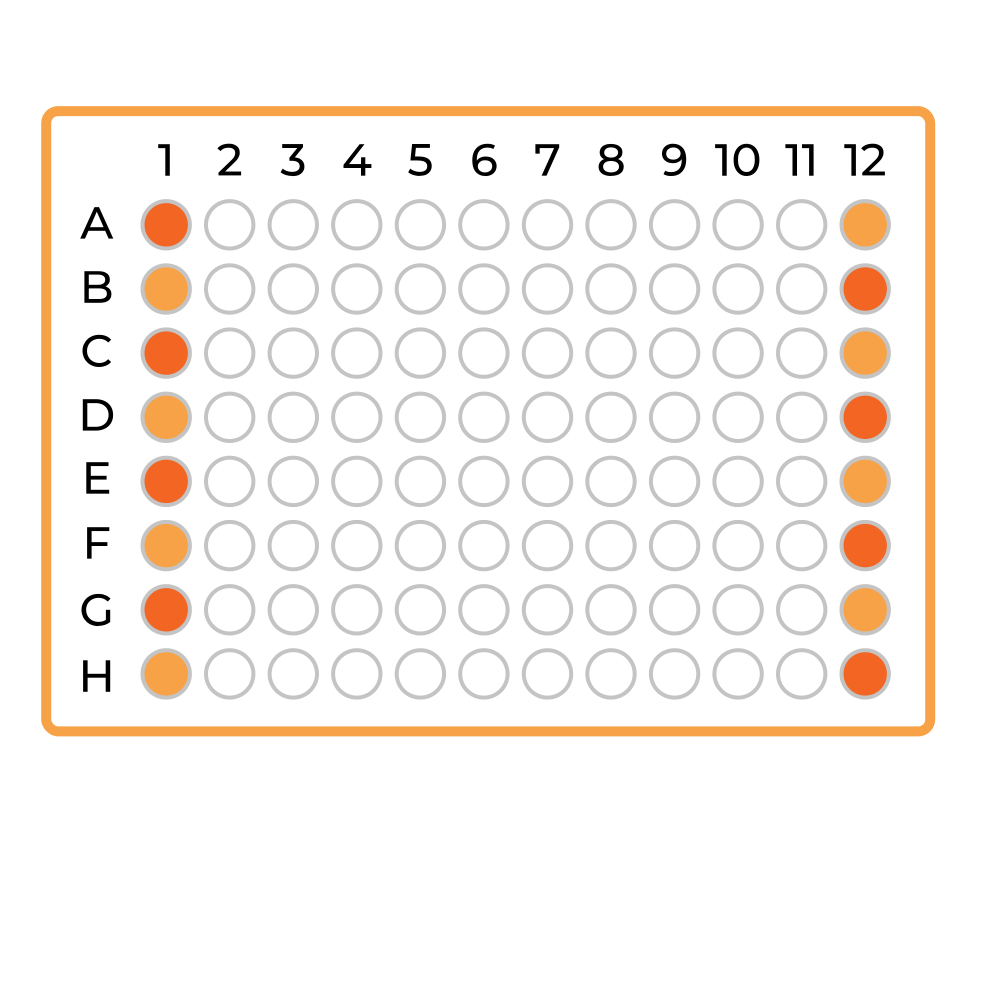
Multi-well Plating
for HT Screens
Dispense cells into 384- and 96-well plates at user defined cell number
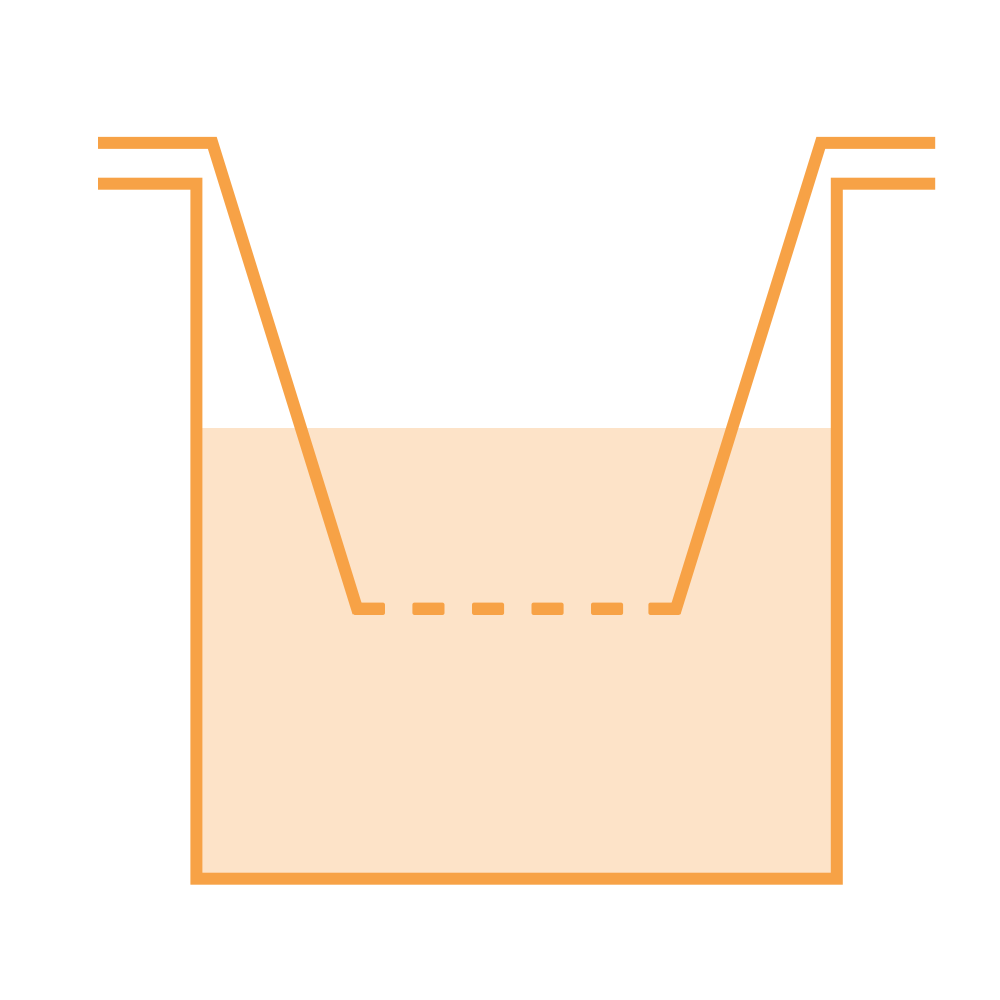
Permeability Assays with
Transwell Plates
Feed and culture cells in transwell plates
for your permeability assays

Immunology Studies with
PBMCs
Differentiate and mature blood cells for
immunological assays
Webinars
The Future of hiPSC Workflows: Automated, Scalable, Reliable
Advance hiPSC workflows by combining fully automated cell culture with integrated liquid handling and intelligent scheduling to deliver consistent, scalable, and contamination-controlled stem cell maintenance and differentiation.
Simplify Cell Feeding and Plating with a Smarter Plate Washer Solution: The Reagent Exchanger
Eliminate manual variability in cell feeding and plating by combining precise aspiration control and gentle sidewall dispensing to deliver consistent, contamination-free media exchange across high-throughput cell culture workflows.

Application Notes
Built-In Sterility: Proactive Contamination Control in the Cellmatic™ System
Microbial contamination remains a persistent challenge in cell culture workflows; the Cellmatic delivers built-in sterility through automated contamination control to support reliable, contamination-free cell culture.

Automated Gentle Media Exchange for Loosely Adherent HEK-293T Cells with the Reagent Exchanger (RX)
HEK-293T cells are prone to detachment, making gentle liquid handling critical during media exchange. The RX automates aspiration and dispensing, reducing cell loss compared with manual pipetting.
