
The field of proteomics is evolving rapidly. In areas ranging from precision medicine and biomarker discovery to drug development and systems biology, researchers now require the ability to analyze hundreds to thousands of proteins across large sample cohorts with exceptional sensitivity. Traditional methods, such as ELISA and Western blotting, struggle to keep pace. These techniques are not only slow and labor-intensive but are also limited by their inability to detect multiple epitopes in a single reaction.
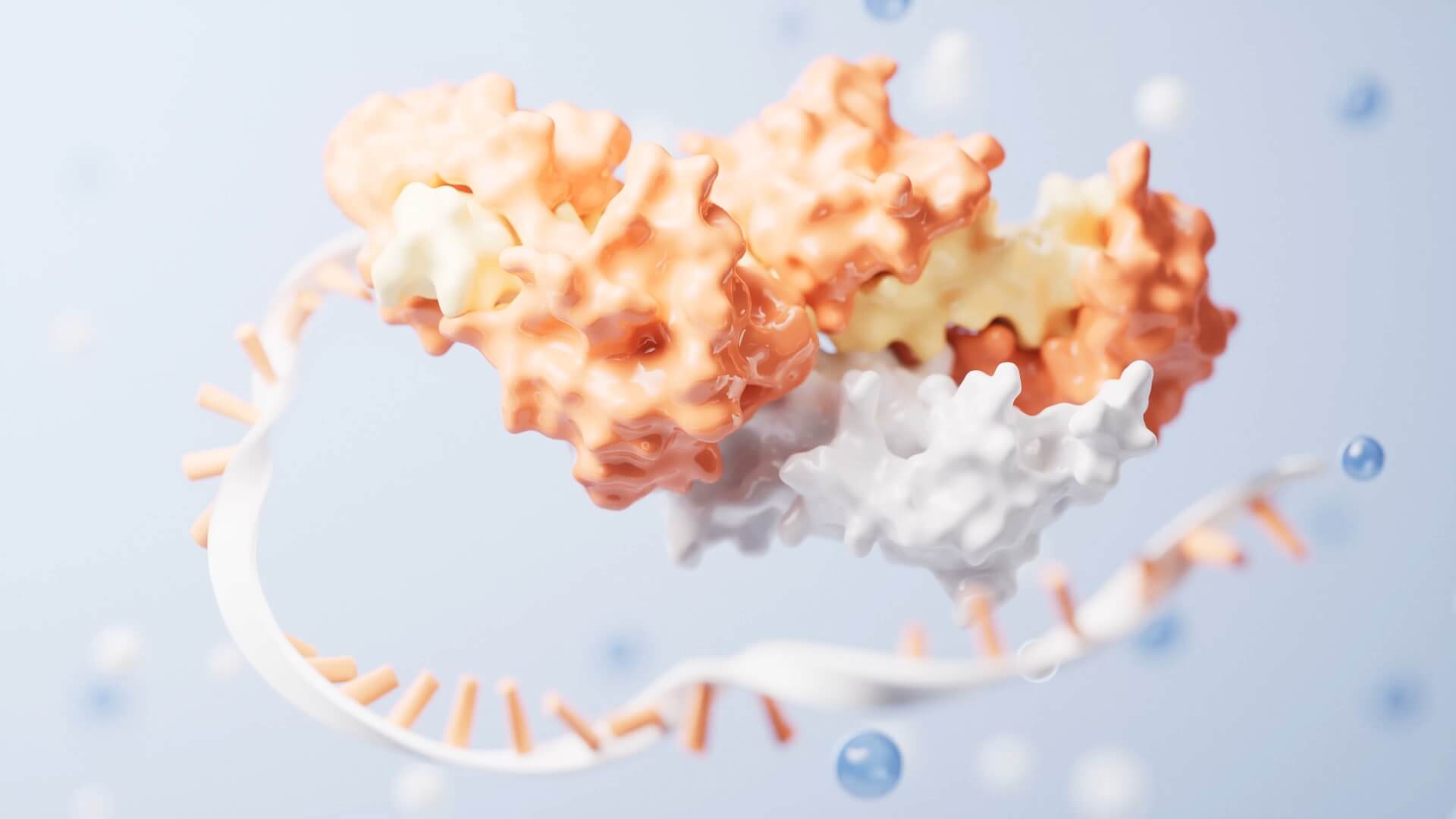
Proximity Extension Assay (PEA) technology enables ultrasensitive, multiplexed protein identification and quantification by combining the specificity of antibodies with the amplification power of PCR.

Antibody recognition in protein analysis
PEA employs a dual-recognition system that ensures exceptional specificity:
- Dual Antibody Binding: Two highly specific antibodies, each conjugated to a unique DNA oligonucleotide tag, bind to different epitopes on the target protein
- Proximity-Dependent Hybridization: When both antibodies bind in close proximity on the same protein molecule, their DNA oligonucleotides come into contact and hybridize, forming a template
- DNA Extension: A DNA polymerase extends the hybridized oligonucleotides, creating a unique, double-stranded DNA sequence that serves as a specific identifier for that protein
- Amplification and Quantification: This newly formed DNA sequence is amplified and quantified using either quantitative PCR (qPCR) or Next-Generation Sequencing (NGS), translating protein presence into measurable nucleic acid signals

Principle of PEA workflow
PEA delivers attomolar sensitivity to detect extremely low-abundance proteins. Its architecture allows for high multiplexing, measuring hundreds to thousands of proteins simultaneously in a single reaction. This is achieved using minimal sample volumes (microliters), while the dual-recognition mechanism ensures exceptional specificity, effectively minimizing false positives.
While PEA offers exceptional sensitivity, its scalability is often constrained by the limitations of conventional liquid handling, which can introduce significant variability that compromises both precision and reproducibility. Manual pipetting, particularly at sub-microliter volumes, is a primary source of such variability. Factors including human error, inconsistent timing between samples, and operator fatigue further undermine data quality and reproducibility. Although automated liquid handlers can mitigate these human factors and improve consistency, their implementation presents a distinct set of challenges, including:
- Viscosity Variability: PEA workflows require handling of reagents with diverse viscosities, ranging from aqueous buffers to viscous enzyme mixes and oil overlays. Standard liquid handlers often struggle to maintain accuracy across this range, resulting in volumetric errors that can compromise assay performance.
- Cross-Contamination Risk: When analyzing multiple samples simultaneously, even trace cross-contamination can skew results, particularly in ultrasensitive assays detecting proteins at attomolar concentrations.
- Time-Sensitive Steps: PEA workflows require simultaneous reagent addition across all wells to ensure uniform reaction conditions. Traditional liquid handlers often fail to achieve the required speed and synchronization.
- Complex Plate Formats: PEA workflows often require non-standard plate formats, sophisticated protocol setup, and tasks not supported by conventional liquid handlers, such as serial dilutions, sample pooling, and reformatting.
The Formulatrix Solution: F.A.S.T. Liquid Handler
The F.A.S.T. (Flow Axial Seal Tip) Liquid Handler is purpose-built to meet the demands of PEA workflows:
Unmatched Precision at Low Volumes: By leveraging positive displacement, the F.A.S.T. system achieves a coefficient of variance of less than 5% at 0.1 μL, safeguarding the integrity of precious samples and expensive reagents. This high level of accuracy is maintained consistently across the full volume range, from 0.1 μL to 50 μL, without requiring a change of pipetting heads.
Viscosity-Independent Performance: F.A.S.T. can handle everything ranging from aqueous buffers to viscous enzyme mixes and oil overlays with consistent accuracy, no liquid class optimization needed.
96-Channel Throughput: The system processes entire plates simultaneously using the 96-channel head, drastically reducing transfer times and ensuring uniform well-to-well incubation times, critical for maintaining assay specificity in time-sensitive PEA workflows.
Flexibility: The F.A.S.T. system offers flexibility to select any number of tips, from 1 to 96, across rows or columns. This unique capability streamlines complex workflows, including indexing 384-well NGS plates, transferring to Integrated Fluidic Circuit (IFC) plates, and executing custom sample arrangements.
Complex Protocols Made Simple: Intuitive software wizards automate serial dilutions, sample pooling, and plate reformatting in just a few steps, eliminating the tedious programming typically required for complex protocols.
Contamination-Free Design: Disposable tips and positive displacement eliminate carryover contamination between samples.
Environmental Control: An optional humidity chamber prevents evaporation during low-volume incubations, protecting your reactions and data integrity.

Automated liquid handling steps for PEA workflow using the F.A.S.T. with a humidity chamber
Validated Workflows: Olink® and Spear Bio
Olink Protocols on F.A.S.T.
Formulatrix and Olink have established a multi-year collaboration to advance the automation of Olink's industry-leading PEA technology. This partnership recognizes F.A.S.T. as a preferred liquid handling platform for Olink's diverse product portfolio.
Seamless IFC Plate Integration: Olink Target and Flex series utilize IFC plates read on the Olink Q100 system. The F.A.S.T. comes preloaded with IFC plate definitions and features automatic labware definition, enabling seamless sample and primer transfers from standard 96-well plates to IFC formats, eliminating the risk of sample mixing or positional errors.
NGS-Ready Sample Preparation: For the Olink Explore series using NGS readouts, flexible tip selection across rows and columns simplifies index addition to 384-well plates. One-click sample pooling for NGS streamlines what would otherwise be a complex, error-prone manual process.
Protected Incubations, Every Time: The F.A.S.T.'s optional humidity chamber is Olink-approved, ensuring consistent conditions across all incubation steps.
Complete Protocol Automation: The F.A.S.T. automates major liquid handling step in Olink workflows:
- Serial dilutions of samples and standards
- Sample and control transfers between plates
- Primer and probe additions to IFC plates
- Sample pooling for NGS preparation
- Reagent mixing and distribution
The result?
Reproducible Olink data with minimal hands-on time, allowing researchers to focus on biology rather than pipetting.
SPEAR UltraDetect™ Protocols on the F.A.S.T.
The F.A.S.T. system is fully validated to run SPEAR UltraDetect™ assays by Spear Bio, enabling next-generation, proximity-based immunoassays that deliver attomolar sensitivity through the Successive Proximity Extension Amplification Reaction (SPEAR).
Validated Performance
Spear Bio has formally approved the F.A.S.T. for automated UltraDetect workflows, comparing it directly to skilled manual operation:
- 4X Faster Processing: Hands-on time reduced from over 1.5 hours to under 20 minutes
- 2X Improved Precision: Mean concentration CV of 3.1% (automated) vs. 6.1% (manual)
The F.A.S.T. automates every liquid handling step of the SPEAR UltraDetect assay:
- Oil overlay dispensing into qPCR plates
- qPCR control and probe mix additions
- Serial dilutions of calibrators and samples
- Sample transfers to qPCR plates
- Reaction mix preparation and plate stamping
- qPCR master mix addition

Distribution of sample concentration %CV for
manual and F.A.S.T. workflows
By combining precise droplet placement under oil overlays, viscosity-independent liquid handling, and the ability to perform time-critical steps simultaneously across 96 wells, the F.A.S.T. system meets the strict demands of the SPEAR workflow. The result is greater scalability, lower reagent costs, and the elimination of cross-contamination risk.
Don't let liquid handling bottlenecks limit your proteomics research. Backed by proven partnerships with industry leaders like Olink and Spear Bio, the F.A.S.T. delivers the precision, throughput, and reliability your PEA workflows demand.
Featured Resources
Discover how the F.A.S.T. liquid handler facilitates the quantification of over 5,000 proteins from as little as three microliters of sample.
Formulatrix and Olink announce a collaboration integrating F.A.S.T. liquid handling with Olink's PEA technology for automated, high-precision protein detection at scale.

Formulatrix and Spear Bio Partner to Advance Ultra-Sensitive Protein Detection
Formulatrix and Spear Bio expand their partnership to automate ultra-sensitive protein detection workflows, bringing greater precision and throughput to low-abundance biomarker research.

Automating SPEAR UltraDetect™ Assays with the F.A.S.T. Liquid Handler
See how the F.A.S.T. liquid handler automates SPEAR UltraDetect™ assays with sub-µL precision, improving throughput and sensitivity for demanding proteomics applications.