
Automate Any Part (or All) of Your Protein Crystallization Workflow
Our fully-integrated automation suite allows users to pick and choose what parts of their protein crystallization workflow they want to automate - all controlled from a single software, ROCK MAKER. This flexibility allows users to add instruments as needed - perfect for any lab size or throughput.


Design and Manage Experiments with Ease
The ROCK MAKER Crystallization Software allows you to screen your proteins against sparse screens. The Screen Experiment Wizard makes experiment design a breeze - creating multiple screen experiments for one or more proteins takes less than a minute. Keep all your protein crystallization data in one place and follow your experiment results throughout the entire process.
Powerful Experiment Design
- Easy-to-use interface
- Most commonly used screens come pre-loaded
- Unique barcodes allow you to track your experiments from dispensing to imaging and scoring

Build Protein Crystallization Screens within Minutes
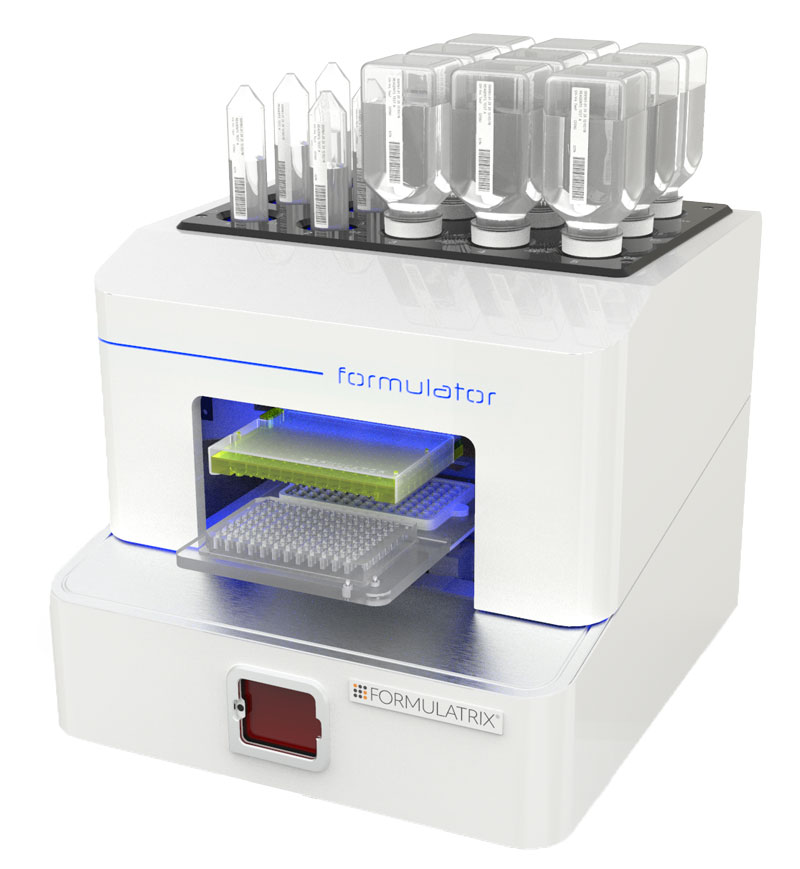
The FORMULATOR® Screen Builder is a next-generation liquid handler designed specifically for protein crystallography. The system uses patented microfluidic technology to dispense up to 34 different ingredients. A 96-nozzle dispensing chip can dispense any volume of any ingredient of any viscosity into any well.
- Positive displacement chip can dispense volumes down to 200 nL with no upper limit into any microplate type, even VDX/Linbro plates
- Integrated barcode scanner automatically loads experiment and ingredient data from the ROCK MAKER Crystallization Software while bottle sensors automatically know where ingredients are located
- Reduce your lab’s costs and environmental impact as no consumables are needed
- Closed ingredient containers prevent evaporation, contamination, and noxious fumes from escaping
Reliable + Reproducible Protein Drop Setting
The NT8® Crystallization Robot is a fast, nanoliter-volume liquid handler with drop dispensing capability for protein crystallization. The 8-tip head aspirates and dispenses drops from 10 nL to 1.5 μL. Reusable tips give you the option to dispose of tips after each dispense or reuse them to reduce costs and waste. Proportionally-Controlled Active Humidification minimizes sample evaporation and increases experiment reproducibility.
Dispense Drops for a Variety of Crystallization Experiments
- Hanging + Sitting Drop Experiments
- Lipidic Cubic Phase (LCP) Experiments
- Additive/Seeding Experiments
- Microbatch Experiments and more

Find the Optimal Conditions for LCP Crystal Growth
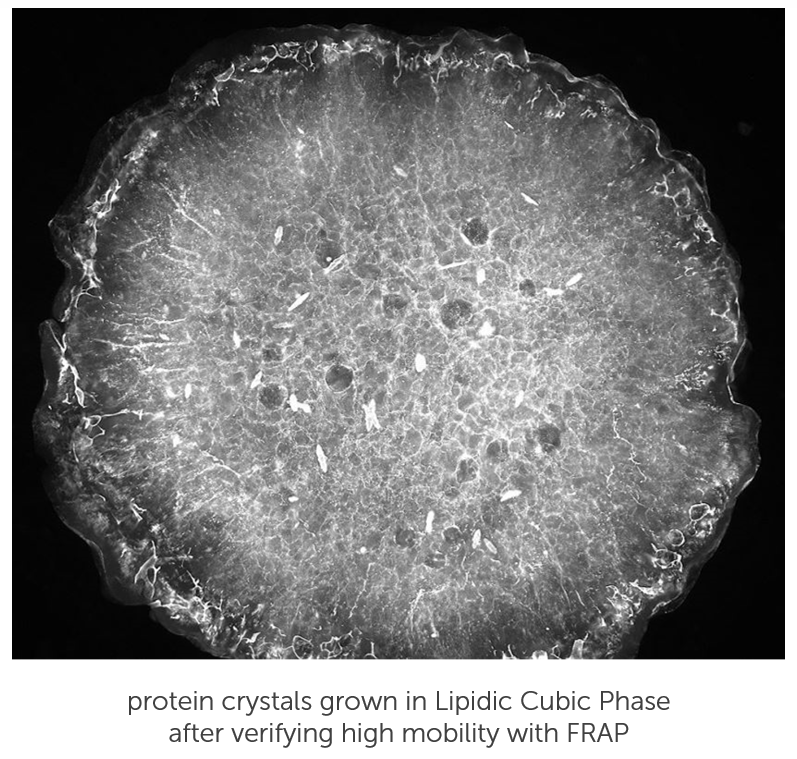
Prior to setting up protein crystallization experiments, you can quickly screen Lipidic Cubic Phase (LCP) conditions using Fluorescence Recovery After Photobleaching (FRAP). FRAP is an optical technique that assesses how easily protein is moving about in an LCP drop. If protein is aggregated, or the LCP structure is collapsed, the protein will not diffuse and therefore never crystallize.
- Accelerate crystallization methods and rule out suboptimal conditions without having to wait on the crystals growing
- Automated and user-friendly system requires a few clicks of a button to initiate a complete analysis of your plate
- All of the FRAP results and analyses are integrated and easily accessible within the ROCK MAKER Crystallization Software.
FRAP was developed in collaboration with Vadim Cherezov (TSRI) and the JCIMPT center led by Ray Stevens and supported by the NIH Common Fund in Structural Biology.

Learn More About Your Protein Drops with Crystal Clear Imaging
ROCK IMAGER® is the most trusted imager for protein crystallography and used by the top 10 pharmaceutical companies and many renowned academic centers worldwide. Image your drops with multiple imaging technologies allowing you to discover more about your protein drops including Visible Light, UV, Multi-Fluorescence Imaging, FRAP, and SONICC. There are various models to fit your budget and workflow to image a single plate up to 940 SBS plates or 1500 LCP plates. All ROCK IMAGERs seamlessly integrate with the ROCK MAKER Crystallization Software keeping all your drop images and experiment data in one spot.


Find the Crystals that You've Been Looking For
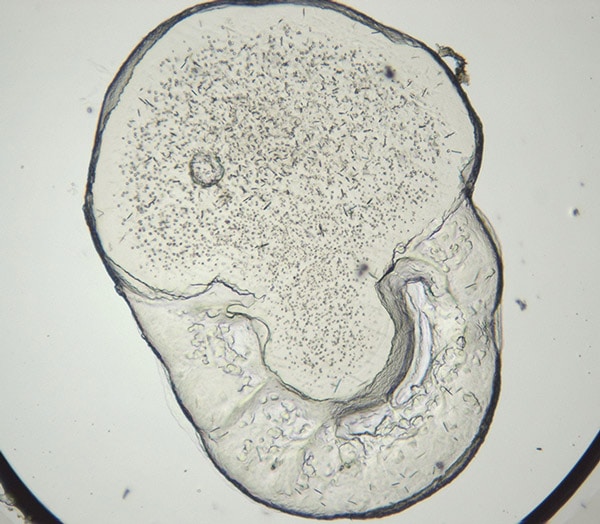
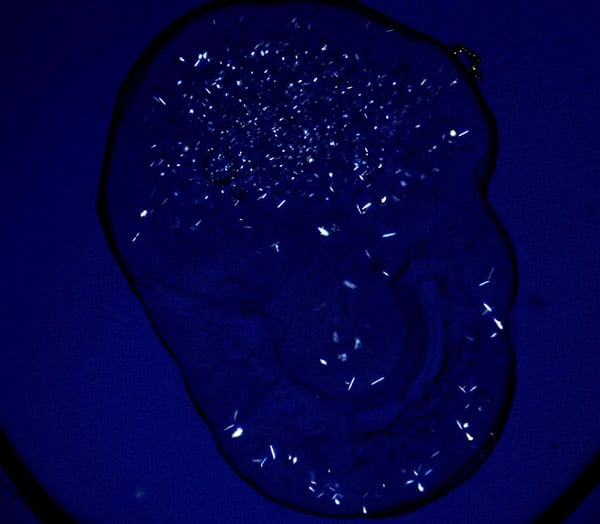
The ultimate imaging technology in visualizing protein crystals, Second Order Nonlinear Imaging of Chiral Crystals (SONICC) definitively finds crystals buried in precipitate or submicron crystals naked to the eye. Two powerful technologies, Second Harmonic Generation (SHG) and Ultraviolet Two-Photon Excited Fluorescence (UV-TPEF) are combined together in a completely automated imager to quickly image your high throughput protein crystallization plates and positively identify protein crystals.

Dynamic and Efficient Image Viewing + Scoring
Images taken by ROCK IMAGER, SONICC, or FRAP are collected by ROCK MAKER, wherein you can compare images and assign scores. Once you’ve found a crystal, you can measure its size and add notes directly to the image itself. Bring out details of your UV, SONICC, and FRAP images using the leveling histogram or optically zoom in with a Region of Interest (ROI).
View + Score Images with Ease:
- Navigate through and score your images using your keyboard and customizable scoring schemas
- View up to four drops simultaneously or compare different inspections of the same drop
- View images with multiple modes including slideshow & full-screen

Analyze Your Data to Improve Future Experiment Design
Carry out an in-depth analysis of your results quickly using the powerful Search & Filter feature of ROCK MAKER. Based on previously performed experiments and user-defined criteria, you can make informed predictions about the most favorable conditions for crystallizing your protein of interest.
Built-In Data Analysis + Reporting Tools
- Use Search and Filter to mine your data to uncover trends based on a variety of parameters, helping you to continue your research efforts and focus in on conditions likely to grow bigger and better crystals
- Create and manipulate charts to visualize your experiment results
- Print various experiment reports for your lab notebooks